Steps to Creating a Balanced Meal
A post by Simona, September 27, 2026
Today I would like to describe the principles that can be used to compose and prepare a harmonious meal, based on the concept of holistic vegetarian cuisine.
In its original sense, the Greek word ἁρμονία (harmonia) meant “connection, union, appropriate ratio, agreement, harmony, melody” (1). In this sense, true harmony can be understood as the result of well-chosen proportions. It is worthwhile to view cooking as an artistic activity that seeks to achieve the best possible proportions based on an overall vision. The harmony achieved in a dish goes beyond the distinction between “good” and “bad” foods and will also have a beneficial effect on health.
How is harmony achieved in a meal?
A look at different dietary philosophies:
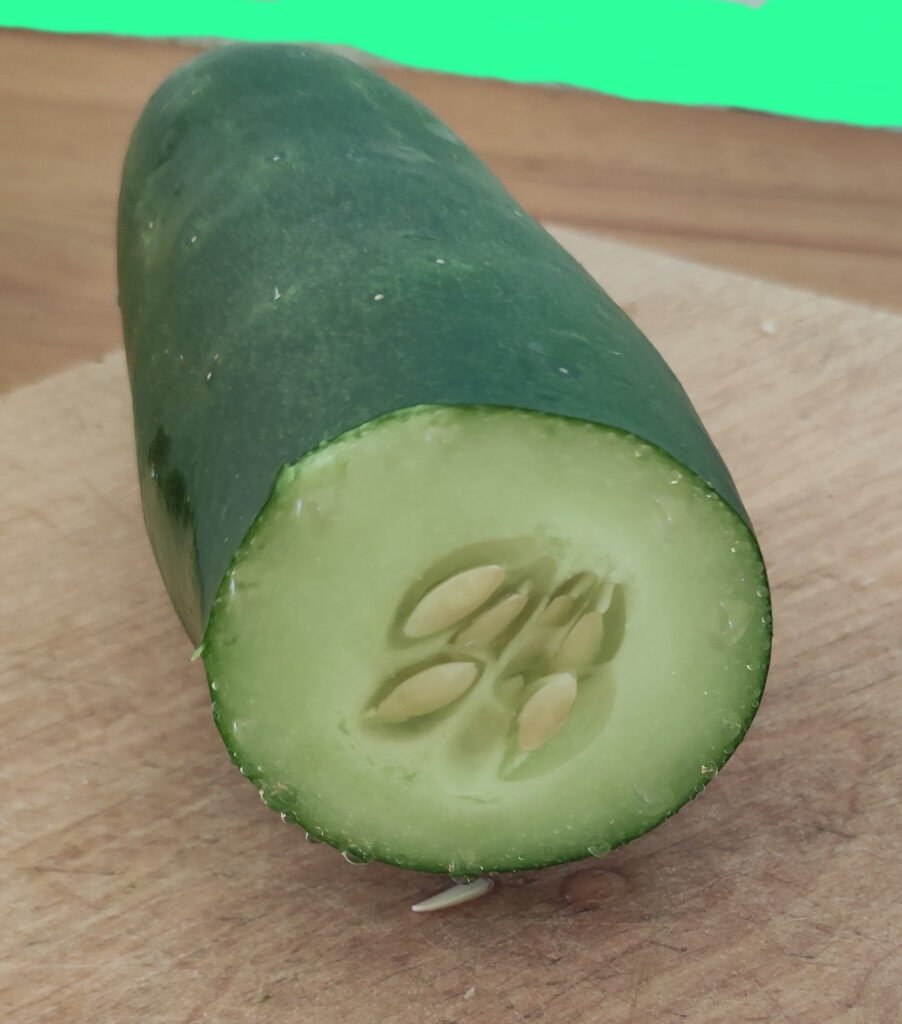
If we take Traditional Chinese Medicine (TCM) or macrobiotics—which originated in Japan—as examples, the principle guiding menu planning is a balanced selection of ingredients between the more warming “yang” elements, such as ginger and garlic, and the more cooling “yin” elements, such as cucumbers and bananas. (2)
According to the teachings of Indian Ayurvedic medicine, as well as in other Eastern cuisines such as Vietnamese cuisine, a balanced meal should include all six flavors: sour, sweet, salty, bitter, astringent, and pungent. (3)
The German Nutrition Society specifies various minimum and maximum values for the intake of different nutrients according to the needs of men and women in their respective life stages and then calculates specific sample menus. (4)
In the art of holistic vegetarian cooking
A harmonious meal should be balanced in every respect—“not too much and not too little” (5) is a guiding principle that is reflected in well-chosen proportions across various parameters: the cook should not spend too much time preparing the meal, but neither should he work too hastily or without careful consideration. Spices should be added to the individual components of a menu in well-balanced proportions, so that no single ingredient is overpowered by the spice, nor should the dish taste bland or insipid. When it comes to adding salt in particular, there is a precise point at which a food’s characteristic flavor comes to the fore and the dish tastes neither salty nor bland. Of course, the various nutrients—proteins, fats, carbohydrates, minerals, vitamins, and trace elements—should also be present in a balanced proportion within a meal.
However, harmony extends to other components as well: a dish should include soft and hard—or more crunchy—elements; it should feature a variety of colors, as well as different shapes and textures. The ratio of cooked to raw ingredients is also important.
Harmony across different levels
Once the chef has formed a mental image of the harmonious menu he ideally wants to create, this may raise questions regarding the selection of individual ingredients as well as the method of preparation. “What is the setting, and for whom am I cooking today?”—this is another question he might consider as he brings the menu to life. Practical experience in various tasks and techniques—in the sense of sound culinary expertise—also contributes to the overall harmony of the dish. As a result, the chef is, on the one hand, highly proactive and, on the other hand, seeks to recreate the ideal image he envisioned beforehand in the dish he is currently preparing.
The idea of harmony should not remain an abstract desire but should take shape step by step in the chosen menu.
An important element, therefore, is creativity, aesthetic sensibility, and the creative development of ever-new learning steps in the selection, preparation, and the act of eating itself. This extends to the point where the harmony of a menu can radiate positively and upliftingly not only through the chef and the diners but also through the broader environment associated with the food. (6)
The three phases of a meal—the selection of ingredients, the preparation, and the act of eating itself—relate to the three levels: the physical body, the soul-etheric process (7), and the spirit; and all three of these levels together determine the harmony of a meal.
In this context, Heinz Grill speaks of a hierarchy (8) that must be observed:
“Food, its preparation, and its selection are, in this
context, essential and distinct areas. A
dietary theory that, for example, disregards the method of preparation
is incomplete. Likewise, it is
incomplete if the manner of eating, table manners,
and overall refinement—as well as awareness regarding
food—are disregarded.”
An example of a well-balanced meal plan
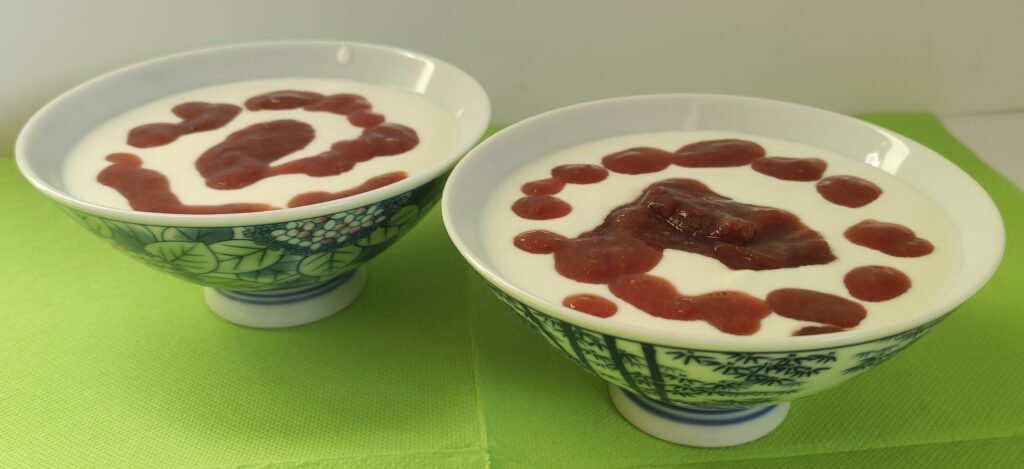
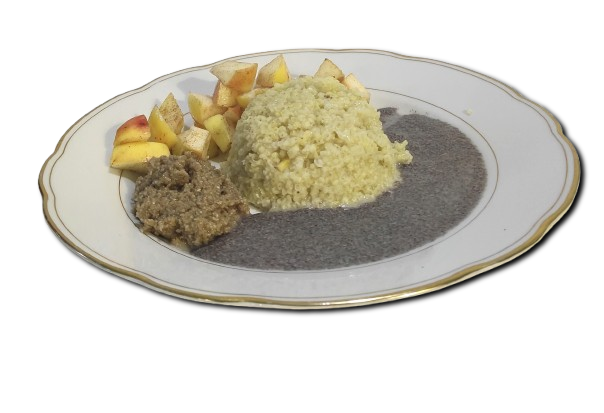
Sweet millet dish with poppy seed sauce, tahini, and apples; for dessert, plain yogurt with jam
Selecting ingredients and putting together a menu
Finely chopped ginger pairs well with mild, light millet as a slightly “spicy” and very distinctive spice. A little sunflower oil and millet milk are enough to give it a slightly sweet flavor. Only those who prefer a very sweet taste should add a little agave syrup or whole cane sugar.
Millet, which is rich in silica, is deficient in the complementary mineral calcium. Since both poppy seeds and sesame seeds are very rich in calcium, they complement the millet very well. Fresh apples add a fruity and crisp element.
This overall very light meal is rounded out by a dessert of fresh, tangy plain yogurt and jam. Ideally, the jam should be homemade, as this allows you to control the sugar content yourself. For many fruits, adding just 12% sugar is enough to take away the tartness and bring out the fruit’s characteristic flavor in the best possible way. Here, too, you can assume that there’s an ideal balance between the fruit and the sugar—one you’ll want to discover through active exploration: by tasting, observing, and sensing.
Steps and Criteria for Preparation
Soak the millet in three times its volume of liquid for eight hours, then gently simmer it together with the ginger. Finally, add a dash of sunflower oil and a little millet milk. The consistency of the grain should be “fluffy” and soft, but not watery.
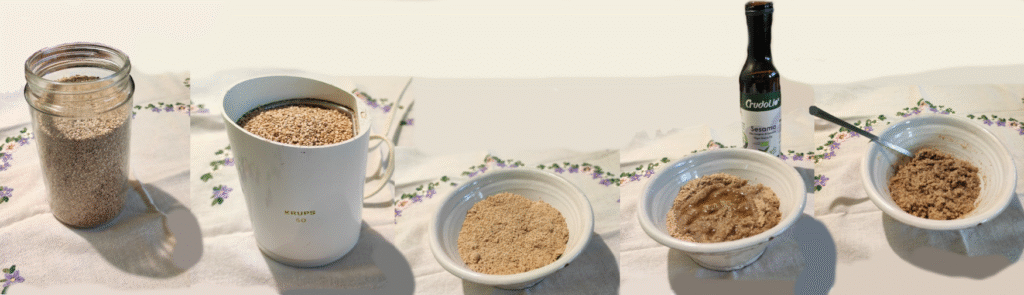
Using sesame seeds ground in a coffee grinder, you can easily make tahini with sesame oil.
The poppy seeds are also ground in a coffee grinder and then mixed with twice the amount of water and a little whole-cane sugar, brought to a brief boil, and left to soak in the warm pot.
The apples are sliced. It’s important to visualize the size of the apple pieces beforehand. This ensures they turn out much more uniform in shape, which in turn enhances the dish’s aesthetic appeal and harmony. Cinnamon with a hint of sesame oil works well as a seasoning.
As for the quantities, 60 g of millet is enough for one person, along with 20 g of sesame seeds, 20 g of poppy seeds, and half to one whole apple.
Focusing Attention During Preparation
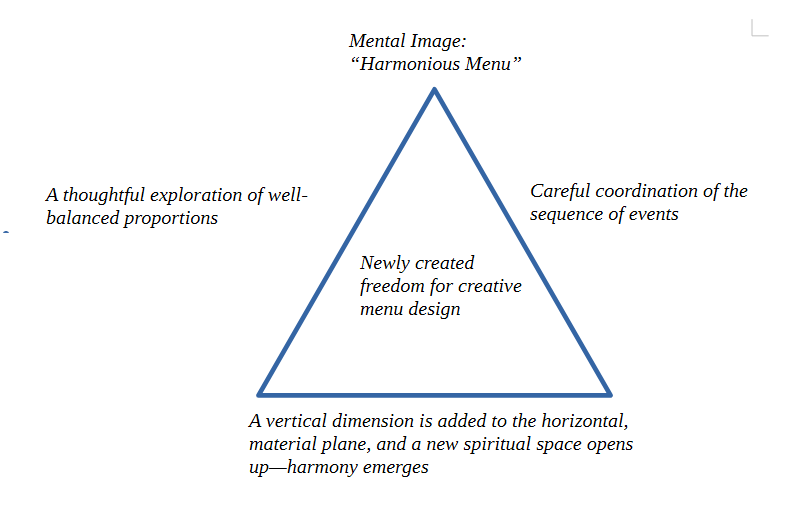
As already mentioned, creating a harmonious meal requires guiding one’s thoughts, focused attention, and actions. I would like to summarize these fundamental activities here once again: As far as thoughts are concerned, you set yourself the goal of creating a harmonious meal and—ideally before taking action—visualize the finished meal on your plate or on the table, very concretely and with all the details. It’s a good exercise in concentration to work on this visualization until it actually stands before you as a vivid, lifelike image. This may take some time at first, but it will gradually get better and better; above all, you’ll enter a process of learning, because you might notice, for example, that you can’t yet clearly imagine the consistency of the millet because you haven’t observed its preparation clearly enough. Once you begin the actual preparation, you should let go of this mental image for the time being, so that the subsequent actions do not become rigidly fixed.
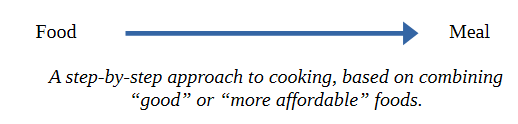
The preparation steps are also best carried out in a well-thought-out order with the goal of completing everything at the right time: for example, the millet should have a little time to soak, while the apples are best eaten as fresh as possible. The tahini can also be stored in a jar for several days. The poppy seed sauce should be allowed to thicken slightly, but not cool completely. The yogurt must be taken out of the refrigerator in time so that it reaches room temperature. However, it should be stirred and served as soon as possible. This results in a well-organized sequence of steps that brings a sense of ease and freedom to the preparation process (see illustration). The more intensely and the better the initial idea can be transformed into a mental image, the easier it is to open up this creative freedom. However, if your attention wanders, other thoughts take over, or the ideal image of the meal fades in your mind, it’s helpful to pause for a moment in the midst of your activities and refocus on the idea. Then the tasks will come more easily again.
The Importance of a Chef’s Inner Attitude
Throughout all these activities, one can practice an inner attitude known in yoga as sākṣin, the attitude of the witness: one observes oneself in action—but not only oneself, but also the various foods and the surroundings. When this attitude of observation is successfully cultivated, one may notice how the various actions flow more freely and easily, even more rhythmically. A space opens up for the creative eye when processes are suddenly perceived more consciously—for example, how the grain breaks down, or whether the vegetables still “meet you” with a certain vitality or have already become limp and wilted. For example, anyone who engages with the exercises of the Free School of Breathing (9)—regardless of cooking—learns to let go of their breath during various everyday activities and to accompany these actions with a more alert and attentive awareness, without becoming too immersed in feelings and impulses of the will. Working in this way brings great joy and is uplifting and creative.
Eating as a Conscious Act of Gratitude
When we finally sit down at the table to eat and take a moment to reflect once more on the origins of the various foods, we often feel a sense of gratitude for the gifts of nature and for the efforts others have made in growing, distributing, and preparing them. We then not only appreciate the harmonious meal on our plate but also experience a sense of harmony between ourselves and our surroundings.
Of course, one will not be able to follow this careful approach every day and at every meal. But the entire cooking experience will take on a completely different character if one’s daily efforts are directed toward this goal. In doing so, one will prioritize different aspects. Simply by exploring the right proportions—occasionally even using a scale, a notepad, and a pencil—one can experience a soothing sense of freedom. For example, the question “Have I added enough salt to the dish?” can disappear entirely once one has seriously considered the necessary amount of salt for a while.
The Holistic Vegetarian Cooking Art Internship
Anyone who would like to experience harmonious menu planning firsthand or
who is looking for a new direction in the field of nutrition
can complete a culinary internship lasting three to
ten days at the Lundo Research Kitchen in Italy.