From Carot to dish
A guest post from Maria Bumes, November 2025
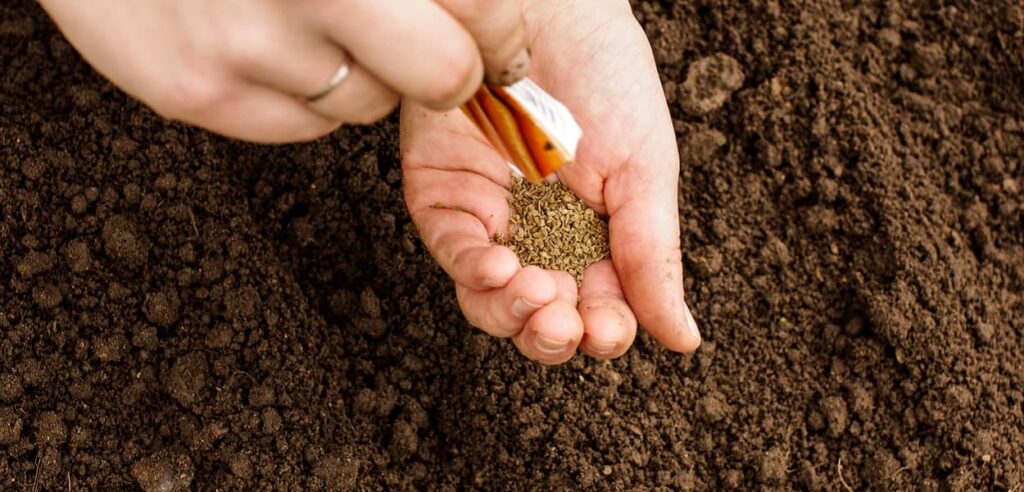
The carrot grows from a tiny, feather-light carrot seed. It is a root vegetable that burrows deep into the earth and receives sunlight through its lush, finely branched green leaves. It may seem surprising, how bright orange this vegetable is, even though it grows completely buried in the earth.
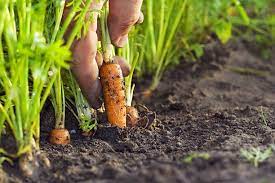
A brief excursion into the meaning of the word ‘root’ – from the Old High German “wurzala”, it developed into the word ‘wurzel’ between 1050 and 1350. It means ‘the twisted’ and is closely related to the verbs ‘to surge, roll, turn, tumble, bubble, be moved and flow’. If you delve deeper into the growth of the carrot, these terms really come to life. The growing root works and twists its way into the earth.
When looking at a carrot, especially when you cut off a slice and hold it up to the light, you notice how strong and evenly centred it is. And this centring power is actually one of the root’s healing properties, helping people to think clearly, concentrate and keep their minds sharp. A very vivid and profound observation of root vegetables, which takes into account the subtle life forces of the plant in relation to its environment and cosmic influences, and to which I refer here, can be found in the book by author and spiritual teacher Heinz Grill. It is entitled ‘Nutrition and the inner sense of giving’ and the carrot is described in the chapter ‘The Nature of the Root’.1
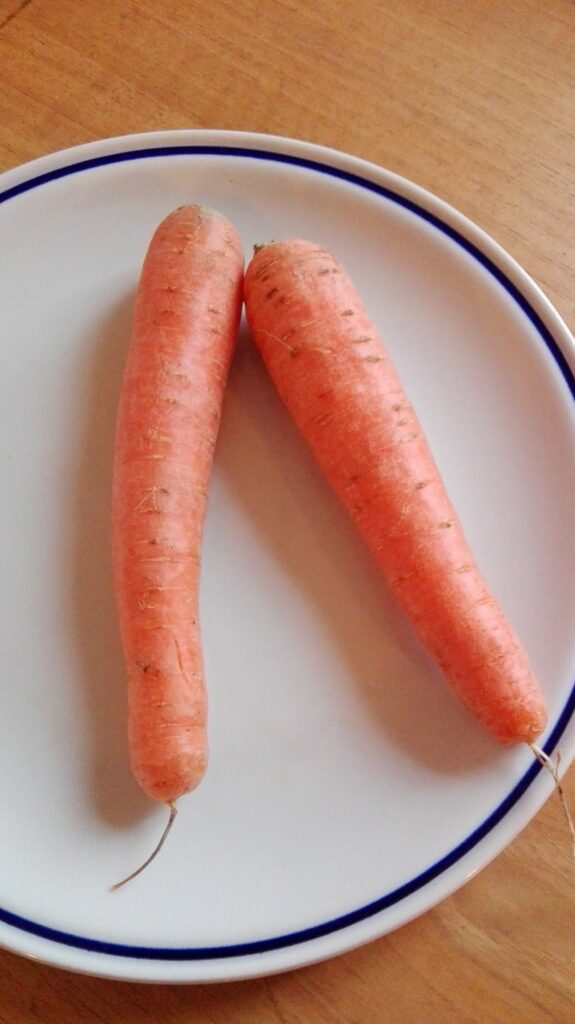
With these vivid ideas about carrots, I can now, as a cook, get down to work and create a carrot dish. First, I think about the shape. Today, I want to cut them lengthwise into thin oval slices. After this step, I fry them in a little olive oil in a pan and season them with very finely chopped fresh ginger or ginger powder. Coarsely ground coriander adds a harmonious complement to the dish. I add salt right at the beginning of the frying process.
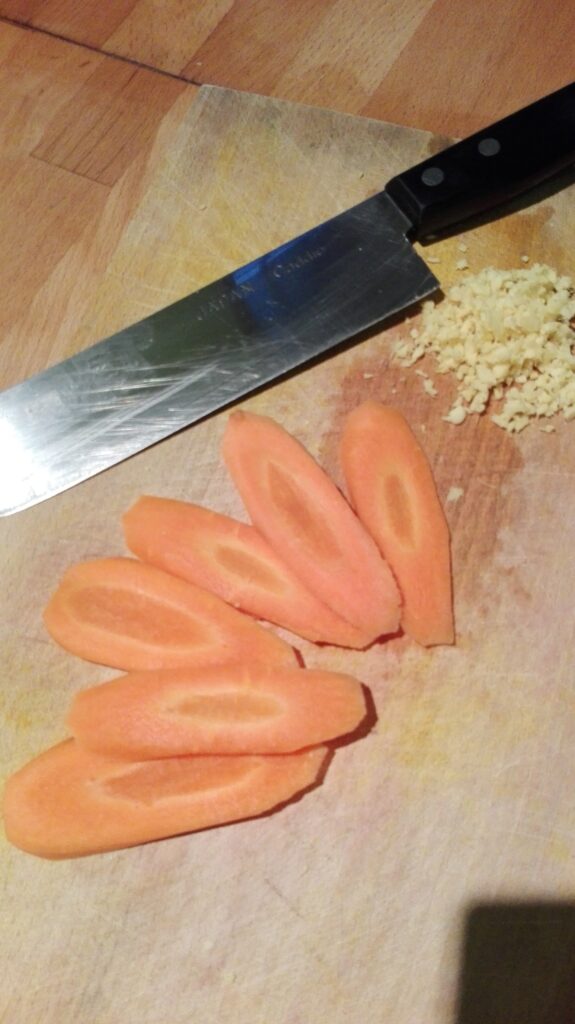
Standing in front of the pan on the stove, where the food undergoes an intense transformation through heat, calmly turning and observing it, is an essential part of the creative cooking process. What happens now? Steam rises, the colour and consistency of the carrot changes slightly with the frying time, the spices soak into the root and infuse it with their aromas. It is particularly interesting to determine the ideal moment when a dish is ready, i.e. no longer al dente, but also not overcooked. With a little attention, this ideal moment is easy to find. Just before I take the carrots out of the pan, I add a small amount of chopped walnuts. These complement the harmonious sweetness, the slight tartness of the coriander and the slightly lemony, sour taste of the ginger with a fine, astringent bitter note.
The dish is now complete. The calm imagination before the cooking process – what should the shape be, what about the spices, what about the consistency, how should the dish shine on our plates? All these mindful processes accompany the cooking process. This proceeds calmly, without haste, with interest and joy in the creation, and not in thoughtless haste or mental absence. The cooking process becomes a creative, artistic and healing activity that ultimately also benefits the people for whom we are preparing the food.
- The book is actually in preparation for the second edition in English language. ↩︎